Select Page
Healing the Heart: How Prayer Helps Us Recover from Emotional Wounds

Healing the Heart: How Prayer Helps Us Recover from Emotional Wounds


Emotional wounds are often invisible, yet they can shape our lives in powerful ways.

Hurtful words, broken relationships, disappointment, grief, and betrayal can leave marks on the heart that linger long after the moment has passed. Many people carry these wounds quietly, unsure how to move forward or find peace again.

The Bible reminds us that God sees the pain we carry-even the pain we struggle to express. Prayer becomes a sacred space where we can bring our wounded hearts honestly before Him.

As Psalm 34:18 gently reassures us:

“The Lord is close to the brokenhearted and saves those who are crushed in spirit.”

This promise reminds us that when our hearts feel most fragile, God is often closest.


Bringing Our Pain Honestly to God

One of the most healing aspects of prayer is that it allows complete honesty. God does not require polished words or perfect faith. He simply invites us to come as we are.

Many of the Psalms are raw prayers filled with grief, confusion, and longing.

King David frequently cried out to God in moments of deep emotional pain. His prayers show us that faith does not mean pretending everything is fine-it means trusting God enough to bring Him our real feelings.

Psalm 147:3 offers a beautiful picture of God’s role in our healing:

“He heals the brokenhearted and binds up their wounds.”

Like a compassionate healer, God gently tends to the places in our hearts that feel bruised or fractured. Prayer becomes the moment we allow Him to begin that healing work.


Releasing Pain Instead of Carrying It Alone

One of the greatest burdens emotional wounds create is the feeling that we must carry them alone. Prayer invites us to release that weight.

1 Peter 5:7 encourages us with a simple yet powerful instruction:

“Cast all your anxiety on Him because He cares for you.”

To “cast” something means to throw it away from yourself. In prayer, we symbolically place our worries, regrets, and emotional pain into God’s hands.

This does not mean the pain disappears instantly. Healing is often gradual. But prayer creates space for God’s peace to enter the places where hurt once dominated.

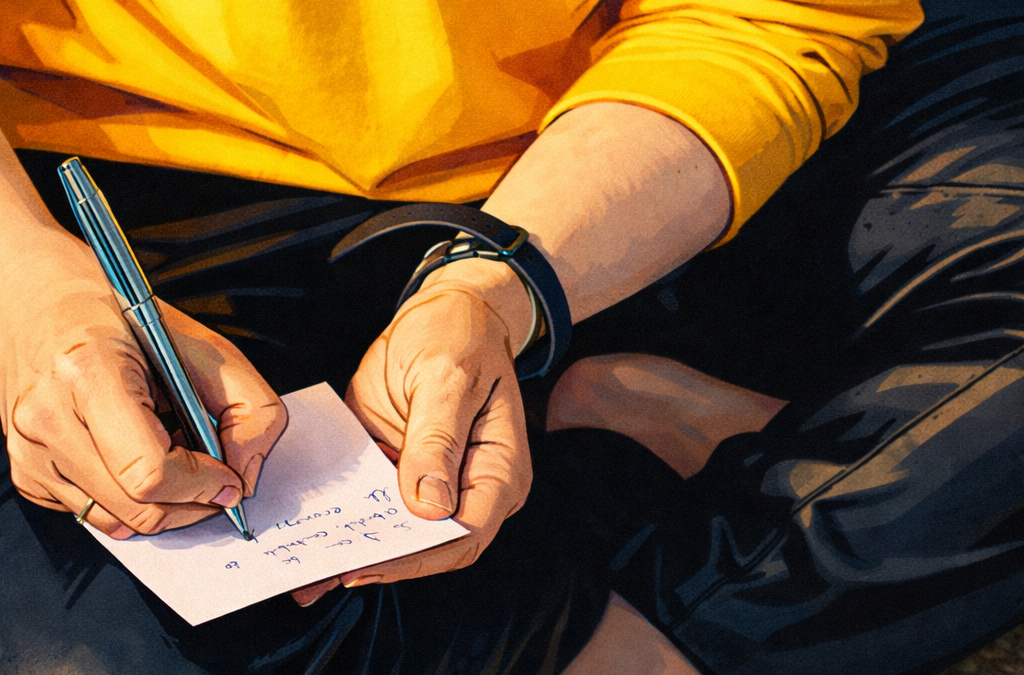
A practical way to do this is through a simple daily prayer practice. Each day, name the specific wound or emotion you are carrying-whether it is anger, sadness, disappointment, or fear-and intentionally offer it to God.

Over time, this practice slowly loosens the grip those wounds have on the heart.


Inviting God to Restore What Was Broken

Emotional wounds often damage our sense of trust-both in others and sometimes even in ourselves. Prayer helps rebuild that trust by reminding us that God is steady even when life is not.

The prophet Jeremiah (17:14) wrote these hopeful words:

“Heal me, Lord, and I will be healed; save me and I will be saved, for You are the one I praise.”

This verse reflects a powerful truth: healing ultimately comes from God.

While time, conversation, and personal reflection all play important roles, spiritual healing deepens when we invite God directly into the process.

Prayer allows us to ask God not only for relief from pain but also for renewal of the heart. Over time, He replaces bitterness with compassion, fear with courage, and despair with hope.


Choosing Forgiveness as Part of Healing

One of the most difficult steps in emotional healing is forgiveness. When we have been deeply hurt, forgiving someone can feel impossible.

Yet forgiveness in prayer is not about pretending the hurt never happened. It is about releasing the hold that pain has on our hearts.

Ephesians 4:31–32 offers wise guidance:

“Get rid of all bitterness, rage and anger… Be kind and compassionate to one another, forgiving each other, just as in Christ God forgave you.”

Prayer gives us the strength to move toward forgiveness slowly and honestly. Sometimes the prayer is simply, “God, help me want to forgive.” Even that small step can begin a powerful transformation.


How This Speaks to Us Today

Healing emotional wounds rarely happens overnight. It is often a quiet, gradual journey. Yet through prayer, we discover that we are not walking that path alone.

God listens patiently, comforts gently, and restores faithfully. When we bring our wounded hearts to Him, healing begins in ways we may not immediately see-but over time we begin to feel peace where pain once lived.

Prayer does not erase our past, but it allows God to redeem it. And in that redemption, we find strength to move forward with hope.


Final Prayer

Heavenly Father,

You know the hidden wounds we carry in our hearts. The pain we struggle to speak, the memories that still ache, and the burdens we quietly hold.

Today we bring these wounds before You. Heal the places in us that feel broken. Replace our pain with Your peace and our fear with Your comfort.

Teach us to release what we cannot control and trust in Your restoring power. Give us the strength to forgive, the courage to heal, and the faith to believe that brighter days are ahead.

Thank You for being close to the brokenhearted and for never leaving us alone in our struggles.

Amen.


Faith in the Ordinary: Discovering God in the Small, Everyday Things

Faith in the Ordinary: Discovering God in the Small, Everyday Things


In a world that celebrates the extraordinary, it’s easy to believe that meaningful moments with God must be dramatic or life-changing.

We often expect divine encounters to appear in big answers, miraculous events, or moments of overwhelming clarity. Yet Scripture quietly reminds us that God is just as present in the ordinary rhythms of daily life.

Faith is not only found on mountaintops or in moments of crisis. Often, it grows in the small spaces of everyday living – morning light through a window, a kind word from a stranger, the calm that arrives after a long prayer, or the quiet reassurance that we are not alone.

When we slow down enough to notice, we begin to discover that God has been walking with us all along.


God Is Present in the Small Moments

The Bible repeatedly reminds us that God often works through the seemingly small and unnoticed parts of life.

“Be still, and know that I am God.” – Psalm 46:10

Stillness is where awareness begins. When life becomes busy and noisy, we can miss the quiet ways God speaks to our hearts. A moment of pause – whether during a morning coffee, a walk outside, or a few minutes of reflection – can open space for God’s presence to become clearer.

Faith in the ordinary begins by slowing down and paying attention.


Gratitude Reveals God’s Presence

One of the simplest ways to experience God in daily life is through gratitude. When we intentionally notice small blessings, our perspective shifts.

“Give thanks in all circumstances; for this is God’s will for you in Christ Jesus.” – 1 Thessalonians 5:18

Gratitude doesn’t mean ignoring difficulties. Instead, it reminds us that even in challenging times, goodness still exists around us.

A warm meal.
A conversation with someone who understands.
A quiet moment of peace at the end of a long day.

These small gifts often carry the fingerprints of God.

Try beginning or ending your day by naming three small things you’re thankful for. Over time, you may find that gratitude opens your eyes to how present God has always been.


Faith Grows Through Everyday Actions

Faith is not only about what we believe; it’s also about how we live. The ordinary choices we make each day can become quiet expressions of faith.

“Whatever you do, do it all for the glory of God.” – 1 Corinthians 10:31

Simple acts-showing kindness, offering encouragement, practicing patience, or helping someone in need-become ways of reflecting God’s love in the world.

These actions may seem small, but they ripple outward in ways we often cannot see.

Sometimes the most powerful expressions of faith are not grand gestures but consistent acts of compassion.


God Often Speaks in Gentle Ways

Many people expect God’s voice to be loud or unmistakable. Yet the Bible reminds us that God frequently speaks through gentle whispers rather than dramatic moments.

When the prophet Elijah searched for God, he did not find Him in the wind, the earthquake, or the fire.

Instead… “After the fire came a gentle whisper.” – 1 Kings 19:12

God’s guidance often appears as quiet insight, calm reassurance, or a subtle shift in perspective. These moments can be easy to overlook unless we create space to listen.

Prayer, reflection, and moments of stillness help us recognize those quiet whispers.


Practical Ways to Discover Faith in the Ordinary

If you want to deepen your awareness of God in everyday life, try these simple practices:

Create moments of stillness.
Even a few minutes of quiet reflection can reconnect your heart with God.

Practice daily gratitude.
Write down or mentally note small blessings each day.

Look for opportunities to show kindness.
Ordinary acts of love often reveal God’s presence.

Reflect on Scripture regularly.
A single verse can shape how we see the day ahead.

Over time, these small habits begin to change how we experience the world. Life’s ordinary moments start to feel sacred.


Let’s Remember This

Faith does not require extraordinary circumstances to grow. It often takes root in the quiet spaces of daily life-the moments we might otherwise overlook.

God is not distant, waiting only for the big events of our lives. He is present in the morning light, the kindness of others, the peace that arrives after prayer, and the quiet assurance that we are held.

When we begin to look for Him in the ordinary, we discover something beautiful: the everyday moments of life are already filled with His presence.

Sometimes the most powerful expressions of faith are simply noticing that God has been there all along.


Final Prayer

Heavenly Father,

Help us slow down enough to notice Your presence in the ordinary moments of life. Open our eyes to the quiet blessings we often overlook and remind us that You walk beside us each day.

Teach us to find gratitude in small things, peace in stillness, and purpose in simple acts of kindness. When life feels busy or overwhelming, guide our hearts back to the quiet assurance that You are near.

May we learn to see Your fingerprints in every part of our lives.

Amen.


When Your Heart Feels Unsteady: Bible Verses for Peace in Uncertain Times

When Your Heart Feels Unsteady: Bible Verses for Peace in Uncertain Times


Uncertainty has a way of unsettling us.

When the future feels unclear, our thoughts can begin to spiral – What if things go wrong? What if I’m not prepared? What if everything changes?

Anxiety often grows in the space where certainty disappears.

Yet throughout Scripture, God reminds us that peace does not come from knowing everything that will happen. True peace comes from knowing the One who holds tomorrow.

The Bible speaks often to anxious hearts. It’s words remind us that God is present in every unknown moment, and that even in times of uncertainty, we are never walking alone.

Here are several powerful Bible verses that can bring calm and reassurance when life feels unsettled.


  1. Peace Beyond Understanding

“Do not be anxious about anything, but in every situation, by prayer and petition, with thanksgiving, present your requests to God. And the peace of God… will guard your hearts and your minds in Christ Jesus.” – Philippians 4:6-7

This verse offers one of the clearest invitations in Scripture: bring your worries to God.

Anxiety often grows when our thoughts remain trapped in our own minds. Prayer opens a door where fear once lived. When we speak honestly to God about what troubles us, we release the burden we were never meant to carry alone.

Notice that the promise here isn’t that every situation will immediately change. Instead, God offers something deeper – a peace that guards our hearts and minds even when circumstances remain uncertain.

Putting This Into Practice:
When anxiety begins to rise, pause and turn your worry into a short prayer. Speak it simply: “God, I’m worried about this. Please guide me and bring peace to my heart.”


  1. You Are Not Alone

“So do not fear, for I am with you; do not be dismayed, for I am your God.” – Isaiah 41:10

One of the most powerful antidotes to anxiety is the reminder that we are not facing life alone.

Uncertain times often make us feel isolated, as though we must solve every problem ourselves. But God’s message throughout Scripture is clear: I am with you.

His presence does not depend on our circumstances. Whether life feels stable or chaotic, God walks beside us.

Putting This Into Practice:
When fear arises, repeat this simple truth to yourself: “God is with me in this moment.” Sometimes peace begins with remembering we are not alone.


  1. One Day at a Time

“Therefore do not worry about tomorrow, for tomorrow will worry about itself. Each day has enough trouble of its own.” – Matthew 6:34

Much of our anxiety comes from trying to live in a future that has not yet arrived.

Jesus gently redirects our attention back to the present. We are not asked to solve every problem of tomorrow today. God provides grace for each day as it comes.

Living faithfully often means focusing on the next small step rather than the entire road ahead.

Putting This Into Practice:
Instead of asking, “What will happen next year?” ask, “What is the next faithful step I can take today?”


  1. Comfort in Overwhelming Thoughts

“When anxiety was great within me, your consolation brought me joy.” – Psalm 94:19

Even the writers of the Psalms experienced anxiety and overwhelming thoughts. Scripture never pretends that faithful people are immune to worry.

Instead, it shows us that God meets us right in the middle of those feelings.

His comfort often comes quietly-through prayer, reflection, Scripture, or moments of stillness that remind us our lives are held in loving hands.

Putting This Into Practice:
When your thoughts feel heavy, spend a few quiet minutes reading Scripture slowly. Let the words settle your mind rather than rushing through them.


  1. A Different Kind of Peace

“Peace I leave with you; my peace I give you. I do not give to you as the world gives.” – John 14:27

The world often ties peace to circumstances-financial security, stable plans, or predictable outcomes.

But Jesus offers a different kind of peace. His peace is steady even when life is unpredictable. It rests not on control, but on trust.

When we anchor our hearts in God’s presence, we begin to experience a calm that does not depend on knowing what comes next.

Putting This Into Practice:
Take a few moments each day to pause and release the need to control everything around you. Sit quietly, breathe slowly, and repeat this simple prayer: “Lord, I trust You with what I cannot see.”

When anxious thoughts about the future appear, gently bring your focus back to God’s presence in this moment. Instead of trying to predict or control what lies ahead, place that uncertainty in His hands.

Over time, this small practice of surrender can help shift your heart from worry to trust, allowing Christ’s peace to settle more deeply within you.


Living with Peace in Uncertain Times

Uncertainty will always be part of life. Yet faith reminds us that uncertainty does not mean abandonment.

God sees the path ahead even when we cannot. Every step we take is still within His care.

When anxiety begins to grow, return to His word. Breathe slowly. Pray honestly. Let Scripture remind your heart of what is true: you are seen, you are guided, and you are deeply loved.

Peace often returns not all at once, but gently-one moment of trust at a time.


Final Prayer

Dear God,

When uncertainty fills our hearts with worry, remind us that You are near. Help us release the fears we carry and place them into Your hands.

Calm our thoughts when they race ahead into the unknown. Teach us to trust You with tomorrow and to walk faithfully through today.

Fill our hearts with the peace that only You can give-a peace that steadies us even when life feels uncertain.

May Your presence guide us, comfort us, and remind us that we are never alone.

Amen.


Faithful Finances: Managing Money God’s Way in a Modern World

Faithful Finances: Managing Money God’s Way in a Modern World


Money touches almost every part of our lives. It influences our decisions, shapes our priorities, and often becomes a source of stress, worry, or even conflict.

In today’s fast-paced world-filled with constant advertising, easy credit, and pressure to keep up with others-it can be easy to lose sight of what God says about finances.

But Scripture offers a different perspective. The Bible doesn’t just speak about money as a practical necessity; it speaks about it as a matter of the heart.

When we manage our finances biblically, we move away from fear and scarcity and toward wisdom, stewardship, and trust in God.

Managing money God’s way isn’t about strict rules or rigid systems. It’s about aligning our financial habits with our faith and allowing our resources to reflect our values.


Recognising That Everything Belongs to God

One of the foundational truths of biblical finance is that everything ultimately belongs to God.

“The earth is the Lord’s, and everything in it.” – Psalm 24:1

When we begin to see money not as something we own but something we manage, our perspective changes. We become stewards rather than possessors.

This mindset can bring surprising freedom. Instead of feeling the pressure to control everything, we begin asking a different question: How can I use what God has entrusted to me wisely?

In practical terms, this might mean creating a thoughtful budget, avoiding unnecessary debt, and making decisions that reflect long-term wisdom rather than short-term impulse.


Practicing Contentment in a Culture of Comparison

Modern life constantly tells us we need more – more upgrades, more experiences, more status. Social media especially can make it seem like everyone else is living a more abundant life.

Scripture challenges this mindset.

“Keep your lives free from the love of money and be content with what you have.” – Hebrews 13:5

Contentment does not mean lack of ambition or responsible growth. Instead, it means recognising that our worth and peace do not come from possessions.

A helpful practice is gratitude. Taking a moment each day to thank God for what we already have shifts our focus away from scarcity and toward provision. Over time, this simple habit can reshape our relationship with money.


Planning with Wisdom

The Bible consistently encourages thoughtful planning and discipline.

“The plans of the diligent lead surely to abundance.” – Proverbs 21:5

Managing finances biblically includes practical wisdom: saving when possible, spending intentionally, and preparing for future needs.

This might look like setting aside a small emergency fund, avoiding lifestyle inflation when income increases, or simply pausing before purchases and asking: Is this wise?

Planning is not about fear – it’s about stewardship. It reflects a mindset that honours the resources God has placed in our care.


Practicing Generosity

Perhaps one of the most transformative biblical principles about money is generosity.

“Each of you should give what you have decided in your heart to give… for God loves a cheerful giver.” – 2 Corinthians 9:7

Giving reminds us that money is a tool, not a master. It breaks the grip of greed and helps us focus on people rather than possessions.

Generosity doesn’t always require large amounts. Even small acts-supporting someone in need, contributing to a meaningful cause, or helping within your community – can have a powerful impact.

More importantly, generosity changes us. It softens our hearts and aligns our priorities with God’s kingdom.


Trusting God with Financial Uncertainty

Even when we try to be wise with money, life can still bring uncertainty – unexpected expenses, economic shifts, or periods of financial strain.

In those moments, Scripture reminds us where our ultimate security lies.

“And my God will meet all your needs according to the riches of his glory in Christ Jesus.” – Philippians 4:19

This promise does not guarantee wealth or ease, but it does offer reassurance: God sees our needs, and He walks with us through every season.

Faithful financial living is not about achieving perfect control. It’s about trusting that even when the numbers don’t make sense, God remains present and faithful.


Take This With You

Managing finances biblically in modern times is less about complicated systems and more about faithful alignment.

When we recognise that God owns everything, practice contentment, plan wisely, give generously, and trust Him through uncertainty, our relationship with money begins to change.

Instead of anxiety, we find peace.
Instead of comparison, we find gratitude.
Instead of fear, we find trust.

Money will always be part of life-but when guided by Scripture, it no longer controls our hearts. Instead, it becomes a tool through which we can reflect wisdom, compassion, and faith.


Final Prayer

Heavenly Father,

Thank You for being our provider and for caring about every part of our lives, including our finances. Teach us to be wise stewards of the resources You have placed in our hands.

Help us to live with contentment, to plan with wisdom, and to give with joyful hearts. Guard us from worry, comparison, and the love of money. Instead, fill us with trust in Your provision and guidance.

May our financial choices reflect our faith and bring honour to You.

Amen.


Renew Your Mind: A Scripture Guide to Replacing Lies with Truth

Renew Your Mind: A Scripture Guide to Replacing Lies with Truth


A gentle, practical devotional guide to retrain your heart to agree with what God already says about you.


Negative self-beliefs rarely shout.
They whisper.

“I’m not enough.”
“I don’t belong.”
“I’ve messed up too much.”

Left unchecked, those whispers begin to sound like truth. But Scripture tells us something different.

God’s Word doesn’t shame your struggles — it gently corrects them. It reminds you who you are, whose you are, and what is still possible.

This guide will help you replace recurring negative thoughts with Scripture-based truth — intentionally, practically, and faithfully.

Over time, truth becomes stronger than doubt.


How This Practice Works

  1. Notice the negative belief.
  2. Write it down honestly.
  3. Find a Scripture that directly speaks into it.
  4. Speak that truth aloud daily for one week.
  5. Repeat it whenever the old thought resurfaces.

This isn’t denial.
It’s renewal.


  1. When You Feel: “I’m Not Good Enough”

Negative belief:
“I’m not good enough. I always fall short.”

Scripture:
“I am God’s workmanship, created in Christ Jesus…” — Ephesians 2:10

Truth:
You are not a failed project. You are God’s workmanship. Growth does not mean rejection — it means refinement.

Speak aloud:
“I am God’s workmanship. He is still shaping me.”


  1. When You Feel: “I Don’t Belong”

Negative belief:
“I don’t fit in anywhere.”

Scripture:
“You are a chosen people, a royal priesthood…” — 1 Peter 2:9

Truth:
Belonging begins with God. Before anyone else defines you, He has chosen you.

Speak aloud:
“I am chosen. I belong to God.”


  1. When You Feel: “I’m Alone”

Negative belief:
“No one really understands me.”

Scripture:
“Never will I leave you; never will I forsake you.” — Hebrews 13:5

Truth:
Loneliness may visit, but it does not stay. God’s presence is constant.

Speak aloud:
“I am never alone. God is with me right now.”


  1. When You Feel: “I’m Too Broken”

Negative belief:
“I’ve messed up too much. God can’t use me.”

Scripture:
“My grace is sufficient for you, for my power is made perfect in weakness.” — 2 Corinthians 12:9

Truth:
Your weakness does not disqualify you. It invites grace.

Speak aloud:
“God’s grace is enough for me.”


  1. When You Feel: “I Have No Purpose”

Negative belief:
“My life doesn’t really matter.”

Scripture:
“For I know the plans I have for you…” — Jeremiah 29:11

Truth:
Even in waiting seasons, purpose is unfolding.

Speak aloud:
“God has a purpose for my life.”


  1. When You Feel: “I Have to Be Perfect”

Negative belief:
“If I’m not perfect, I’ll disappoint everyone.”

Scripture:
“There is now no condemnation for those who are in Christ Jesus.” — Romans 8:1

Truth:
You are accepted, not because you are flawless, but because you are loved.

Speak aloud:
“I don’t have to be perfect to be accepted.”


  1. When You Feel: “I’m Not Strong Enough”

Negative belief:
“I can’t handle this.”

Scripture:
“I can do all things through Christ who strengthens me.” — Philippians 4:13

Truth:
Strength does not come from you — it flows through you.

Speak aloud:
“Christ strengthens me for what I face today.”


  1. When You Feel: “I Am Forgotten”

Negative belief:
“No one sees what I’m going through.”

Scripture:
“The Lord is close to the brokenhearted.” — Psalms 34:18

Truth:
God sees quiet suffering. He draws near to it.

Speak aloud:
“God is close to me in this moment.”


  1. When You Feel: “I’ve Failed Too Many Times”

Negative belief:
“I keep failing. I’ll never change.”

Scripture:
“Though the righteous fall seven times, they rise again.” — Proverbs 24:16

Truth:
Falling is not final. Rising is part of righteousness.

Speak aloud:
“I rise again with God’s help.”


  1. When You Feel: “My Future Is Uncertain”

Negative belief:
“I don’t know what’s ahead, and it scares me.”

Scripture:
“You will keep in perfect peace those whose minds are steadfast…” — Isaiah 26:3

Truth:
Peace is not found in certainty. It is found in trust.

Speak aloud:
“My mind is steady in God. He gives me peace.”


Creating Your Own Truth Replacement

When a negative thought appears:

  • Write it exactly as it sounds.
  • Ask: What does God say about this?
  • Search Scripture for one verse that directly speaks into it.
  • Turn that verse into a short declaration.
  • Repeat it daily.

Over time, your internal dialogue shifts.

Fear becomes quieter.
Grace becomes louder.
Truth becomes familiar.


A Closing Prayer

Father,
Thank You that Your Word speaks more clearly than my fears.
When lies rise up, teach me to answer them with truth.
Help me notice the thoughts that do not come from You —
and gently replace them with what You have already declared.

Renew my mind.
Steady my heart.
Let Your voice become the one I recognize most easily.

May Your truth take root deeply in me.
And may peace grow where doubt once lived.

In Jesus’ name,
Amen.


Scrolling Without Losing Your Soul: A Faith Guide to Beat Social Media Negativity

Scrolling Without Losing Your Soul: A Faith Guide to Beat Social Media Negativity


Social media was created to connect us – yet so often, it leaves us feeling anxious, inadequate, or overwhelmed.

We scroll through curated lives, heated debates, and endless opinions. Before we realise it, comparison creeps in, peace slips away, and our hearts feel unsettled.

If you’ve ever closed an app feeling heavier than when you opened it, you’re not alone.

The question is not whether we should abandon the digital world altogether – but how we can navigate the negativity of social media with wisdom, peace, and faith.

Scripture reminds us that while the world around us may be noisy, our hearts do not have to be.


Guarding Your Heart in a Digital World

“Above all else, guard your heart, for everything you do flows from it.” – Proverbs 4:23

Social media is not just information – it is influence.

What we consume shapes our thoughts. What shapes our thoughts influences our emotions. And our emotions often determine our actions.

Guarding your heart doesn’t mean living in fear. It means living intentionally.

Ask yourself:

  • Does this account inspire peace or provoke comparison?
  • Does this content encourage growth or stir resentment?
  • Do I leave this space feeling strengthened – or diminished?

Unfollowing, muting, or limiting time online is not weakness. It is wisdom.


Replacing Comparison with Identity

One of the quiet dangers of social media is comparison. We compare our homes, relationships, careers, bodies, achievements – and forget that we are seeing highlight reels, not whole stories.

“For we are God’s handiwork, created in Christ Jesus to do good works.” – Ephesians 2:10

You are not in competition with anyone. You are uniquely crafted, intentionally designed, and deeply loved.

When comparison begins to whisper, replace it with truth:

  • I am God’s workmanship.
  • My journey is unfolding in His timing.
  • I don’t need to perform for approval.

Social media measures likes. God measures faithfulness.


Choosing Peace Over Reaction

Online negativity thrives on reaction. Outrage spreads faster than encouragement. Arguments escalate quickly behind screens.

“Let your gentleness be evident to all. The Lord is near.” – Philippians 4:5

Before responding to a post that stirs anger, pause. Pray. Ask:

  • Is this mine to carry?
  • Is my response rooted in love or ego?
  • Will this bring light or simply add noise?

Not every opinion requires your engagement. Sometimes strength looks like silence. Sometimes maturity looks like stepping away.

You are not called to win arguments – you are called to reflect Christ.


Creating Boundaries That Protect Your Peace

If negativity is overwhelming, practical boundaries can restore balance.

Here are simple, faith-centered habits:

  • Set time limits for scrolling.
  • Begin your morning in Scripture before opening any app.
  • End your evening in prayer instead of comparison.
  • Curate your feed intentionally – follow voices that inspire hope and truth.
  • Take digital Sabbaths – one day a week to disconnect and reconnect with God.

“You will keep in perfect peace those whose minds are steadfast, because they trust in You.” – Isaiah 26:3

Peace is not accidental. It is cultivated.


Remembering Where True Worth Comes From

Social media constantly invites us to measure ourselves – by followers, validation, visibility.

But your worth was settled long before you posted anything.

“Am I now trying to win the approval of human beings, or of God?” – Galatians 1:10

When your identity is rooted in God, external noise loses its power. You no longer scroll looking for affirmation. You walk knowing you are already accepted.

And from that place, you can engage online not from insecurity – but from stability.


Let’s Remember This

Social media itself is not the enemy. It can encourage, inspire, and connect. But without awareness, it can also distract, divide, and distort.

Navigating the negativity of social media begins not with deleting apps – but with anchoring your heart.

When you know who you are in Christ, negativity becomes background noise, not a defining voice.

You can scroll – without losing yourself.
You can engage – without compromising peace.
You can participate – without surrendering your identity.

And when it becomes too loud?

You can always log off – and lean into the quiet presence of God.


Final Prayer

Heavenly Father,

In a world that is constantly speaking, help me listen first to You.

Guard my heart from comparison, anger, and insecurity. Give me wisdom in what I consume and courage to step away when I need peace.

Anchor my identity in Your truth, not in approval or opinion. Help me reflect gentleness, grace, and light in every space I enter – online and offline.

Restore my calm when negativity feels overwhelming. Remind me that my worth is secure in You.

In Jesus’ name,
Amen.